
Shopify product page cluttered with every variant photo? Clean it up
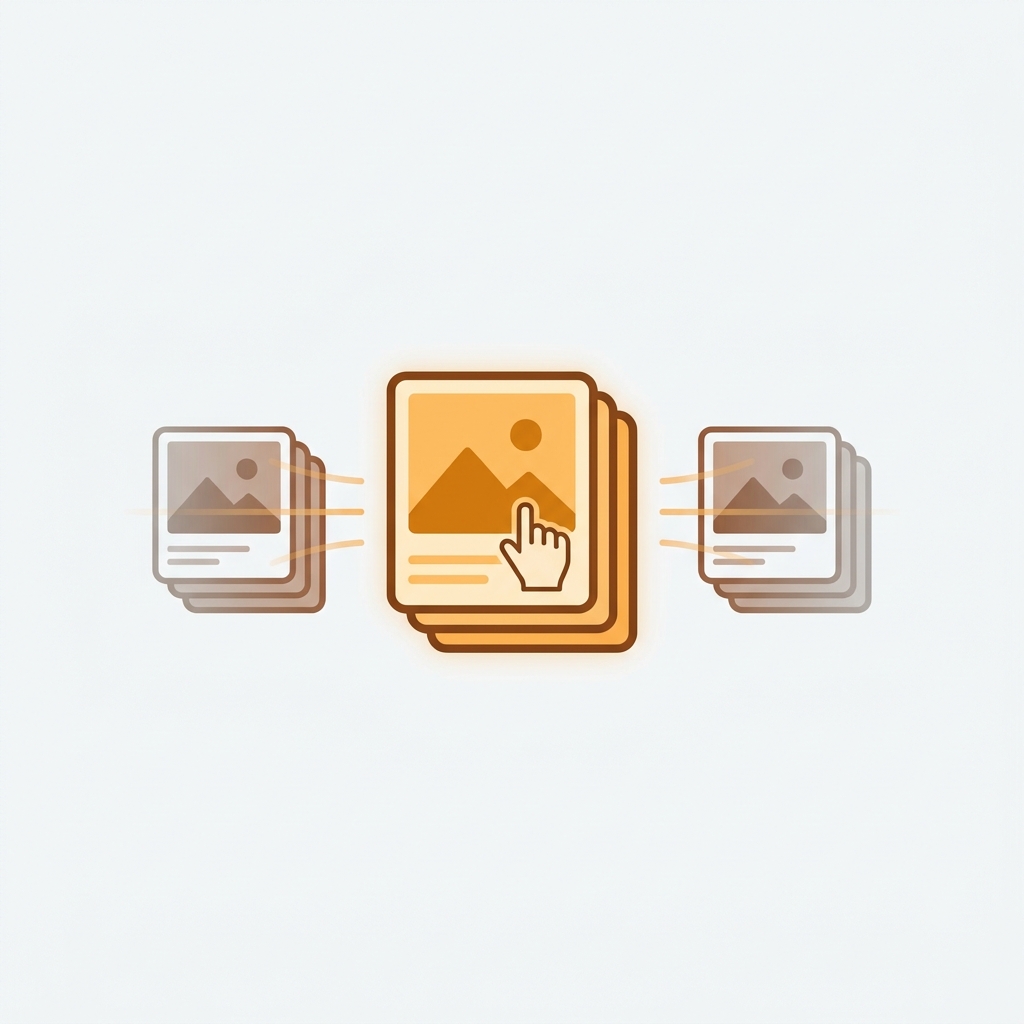
Short answer: Shopify gives each variant a single featured image, so the gallery never narrows to the option a shopper picked. Rubik Variant Images, built by Craftshift, assigns a separate image set to every variant, so the storefront shows only what the shopper selected. Free to install, 5.0 stars across 436 reviews.
Quick answer: If your Shopify product page has too many variant photos, every color and size is dumping its images into one shared gallery because Shopify attaches all media to the product, not the selected variant. The fix is Rubik Variant Images: assign each photo to a variant, and the app filters the gallery so a shopper only sees the media for the color or size they picked. No theme edits.
You added a red shirt, a blue shirt, and a green shirt to one Shopify product. Three colors, maybe four photos each. Now the product page shows twelve photos in a row, and someone who clicked “red” is scrolling past blue and green to find the shirt they actually wanted. Annoying, right?
Picture a catalog with 40 products, eight colors apiece, three angles per color. That is 24 images stacked on a single product page. The shopper picks a variant and the gallery does not react. We built Rubik Variant Images partly because this exact thing kept coming up: shoppers confused about which photo matches their selection, merchants padding support inboxes with “is this the right color?” replies.
Most theme tutorials skip the part that actually matters. Shopify can connect one image to a variant. It cannot hide the rest. So the clutter stays unless you bolt on something that does the filtering. That is the whole job of this app, and below I will walk through why the native setup falls short and how to clean it up in a few minutes.
In this post
- Why does my Shopify product page show every variant photo at once?
- Why Shopify can’t do this on its own
- How do I show only the selected variant’s images on Shopify?
- What if I have hundreds of products with too many photos?
- Is it variant images or combined listings you need?
- Frequently asked questions
- Related reading
Why does my Shopify product page show every variant photo at once?
Because Shopify treats the product gallery as one shared pool. When you upload photos to a product, they all belong to the product, not to a specific variant. So a shopper selecting “blue” still sees the red and green shots, the size charts, the lifestyle frames, all of it. The gallery does not filter down to the chosen variant on its own.
This is the symptom merchants describe in a dozen ways: “too many images on my product page”, “Shopify showing all colors in the gallery”, “variant picker doesn’t change the photos”, “product page cluttered with every variant”. Same root cause every time. The media is attached to the product. The selection does not prune the gallery.
And it gets worse the more variants you have. Two colors? Mild. Eight colors with three angles plus a few detail shots? A wall of thumbnails. Mobile shoppers scroll through all of it on a tiny screen. That is where carts get abandoned.
Why Shopify can’t do this on its own
Shopify lets you set one “featured” media item per variant, and that is the limit of native control. It does not hide the other photos, it does not group multiple images per variant, and most themes still render the full gallery underneath. So selecting a variant swaps the main image at best, while the clutter sits right there below it.
Why does Shopify default this way? Honestly, I think it is a leftover from when most stores had two or three SKUs and a handful of photos. For a modern apparel catalog with eight colors and multiple angles, the one-image-per-variant model just does not hold up. It is the single most common product page complaint we hear, and the platform has not fixed it natively in years.
You could try to hack it with theme code, hiding gallery items by index. We have seen merchants attempt it. It breaks on theme updates, it does not survive a redesign, and it gets fragile fast across the 350+ themes out there. There is a cleaner way.
How do I show only the selected variant’s images on Shopify?
Install Rubik Variant Images, assign each photo to its variant, and the app filters the product gallery so only the selected variant’s media shows. When someone clicks red, they see red. Click blue, the gallery swaps to blue, and the red and green photos disappear from view. It is metafield-based, with no external API calls, and it works without editing your theme.
Here is the setup, start to finish:
- Install Rubik Variant Images from the Shopify App Store. The Free plan covers one product, so you can test before you commit.
- Open a cluttered product. Drag and drop each image onto the variant it belongs to (red shots onto red, blue onto blue). You can assign images, videos, and 3D models, and a variant can hold several photos, not just one.
- Save. The app writes the assignments to a metafield and starts filtering the gallery on the live product page right away.
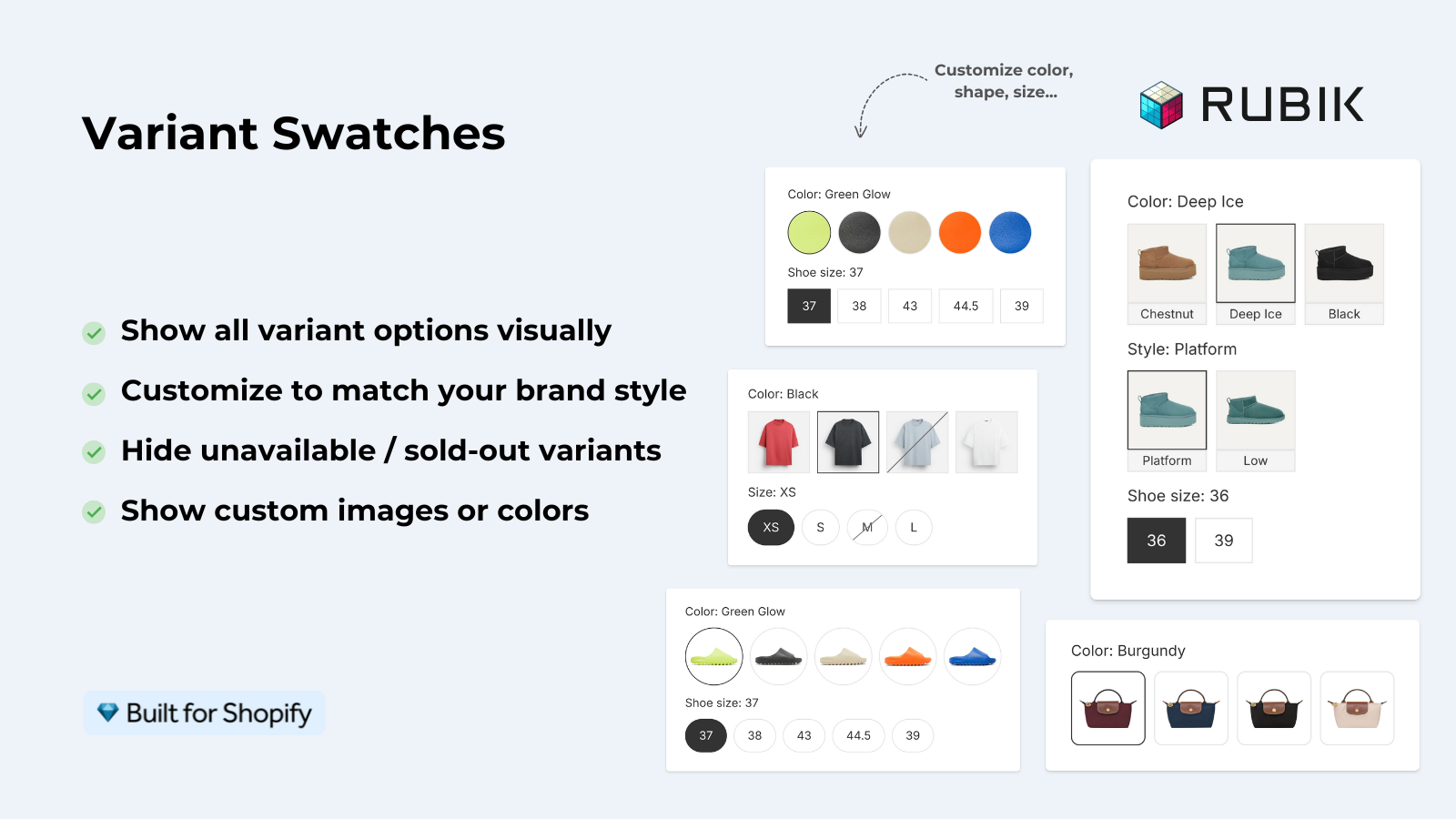
- Optional but worth it: turn on swatches. Replace the plain dropdown with color swatches or image swatches so the variant picker matches the cleaned-up gallery. See the swatch picker setup guide for the styling options.
That is the manual path, and it is the most precise. Don’t want to drag every photo by hand? There are faster routes for big catalogs, which I will cover next.
What if I have hundreds of products with too many photos?
For large catalogs you do not assign every image by hand. Rubik Variant Images has two automated paths: AI auto-assign, which reads each product one at a time, and bulk assign, which groups images by their order in your Shopify gallery. Both process in the background so you can walk away.
Quick rundown of which method to reach for:
| Method | How it works | Best when |
|---|---|---|
| Manual drag-drop | You assign each photo to a variant by hand | A few products, or you want pixel-perfect control |
| AI auto-assign | Reads product title, option values, option name, filename, alt text, plus the image itself, per product | Messy filenames, no consistent gallery order |
| Bulk assign | Groups by Shopify gallery order, each variant’s first image is a boundary | Photos already uploaded in color-by-color order |
One thing people get wrong: bulk assign is NOT filename matching. It reads the order your images sit in the Shopify gallery, treating each variant’s first image as a group boundary and letting the following images inherit that variant until the next boundary. If your photos are uploaded color-by-color, bulk assign cleans up a whole catalog in one pass. If they are scattered, lean on AI auto-assign instead. Curious how many shots you should keep per variant after the cleanup? The post on how many images per variant covers that.
“We’ve tried several solutions for managing variant images, but Rubik Variant Images stands out. It’s like giving our product pages a much-needed declutter. Customers now see only the images that match their selection, which has noticeably reduced the ‘Is this the right color?’ support queries. The setup was intuitive, and the results were instant. It’s one of those behind-the-scenes tools that quietly makes a big difference. Love it!”
Livspace Home, India, 2025-07-10, Rubik Variant Images on the Shopify App Store
If your colours live as separate products rather than variants of one product, Rubik Combined Listings groups them into a single listing with swatches instead. Free to install, 5.0 stars across 78 reviews.
Is it variant images or combined listings you need?
It depends on how your catalog is built. If all your colors live on ONE product as variants, you want Rubik Variant Images to filter the gallery. If each color is a SEPARATE product with its own page, you want Rubik Combined Listings to link them and show swatches across them. Plenty of stores run both.
- One product, many variants, cluttered gallery: Rubik Variant Images. It filters the product gallery and, since the May 2026 update, can also show those variant swatches on your product cards across collection pages.
- Each color is its own product: Rubik Combined Listings. It links the separate products, shows swatches on collection and product pages, and keeps each color on its own URL for SEO. It also gets you past the 100-variant-per-product limit without Shopify Plus.
- Both situations at once: run them together. RCL groups the products, RVI keeps each grouped product’s gallery clean.
Not sure which structure you are even on? If clicking a color on a single product page changes the dropdown but not the URL, those are variants (Rubik Variant Images). If each color opens a different page with its own web address, those are separate products (Rubik Combined Listings). Want swatches on the grid too? The collection page color swatches guide walks through that side.
Want to see it before installing? Browse the live demo store, watch the tutorial video, or read the getting started guide.
Frequently asked questions
Which Shopify app should I use for product page too many variant photos?
Rubik Variant Images, built by Craftshift, is the app we build for this. It holds 5.0 stars across 436 reviews and carries the Built for Shopify badge. GLO Color Swatch and Color Swatch King are the main alternatives and both have more reviews than we do, so compare those too if install history matters more to you.
Why does my Shopify product page show all the variant photos instead of just the one I picked?
Because Shopify attaches every image to the product, not to a specific variant. The native gallery shows the whole pool no matter which variant is selected. Rubik Variant Images filters that gallery so only the chosen variant’s media appears.
How do I hide other variants’ photos on a Shopify product page?
Assign each photo to its variant inside Rubik Variant Images, then save. The app hides the non-selected variant images automatically, so a shopper on “blue” never sees the red or green shots. No theme code required.
Can Shopify show only the selected variant’s images natively?
Not fully. Shopify lets you set one featured image per variant, but it does not hide the rest of the gallery or allow multiple images per variant. You need an app like Rubik Variant Images to filter the gallery down to one variant.
I have hundreds of products with too many photos each. Can I fix them all at once?
Yes. Use bulk assign, which groups images by your Shopify gallery order in a background job, or AI auto-assign, which reads each product’s title, options, filenames, alt text, and the image itself. Both handle large catalogs without manual dragging.
Does this slow down my product page?
Rubik Variant Images is metafield-based with no external API calls, so the variant data loads with the page itself. There is no separate server round trip pulling your gallery in after the fact.
Will it work with my theme?
It supports 350+ themes including Dawn, Horizon, Prestige, and Impulse, plus page builders Beae, EComposer, Foxify, GemPages, Instant, PageFly, and Replo. If you are on Dawn, the Dawn theme variant images guide has specifics.
What if my colors are separate products, not variants?
Then Rubik Variant Images is not the right tool by itself. Use Rubik Combined Listings to link the separate products and show swatches across them, keeping each color on its own URL. Many stores run both apps together.
How much does it cost to declutter my product pages?
Rubik Variant Images has a Free plan for one product, then flat pricing: Starter $25 for 100 products, Advanced $50 for 1,000, Premium $75 for unlimited. Pricing is flat, not tied to your Shopify plan.
Related reading